Biocultural diversity, sandcastles and social transformations
Continuing our series of interviews with leaders in their respective fields of the climate and nature transition, this month we sat down with Marion Osieyo, a strategic advisor and storyteller working at the intersection of ecological justice and human flourishing.

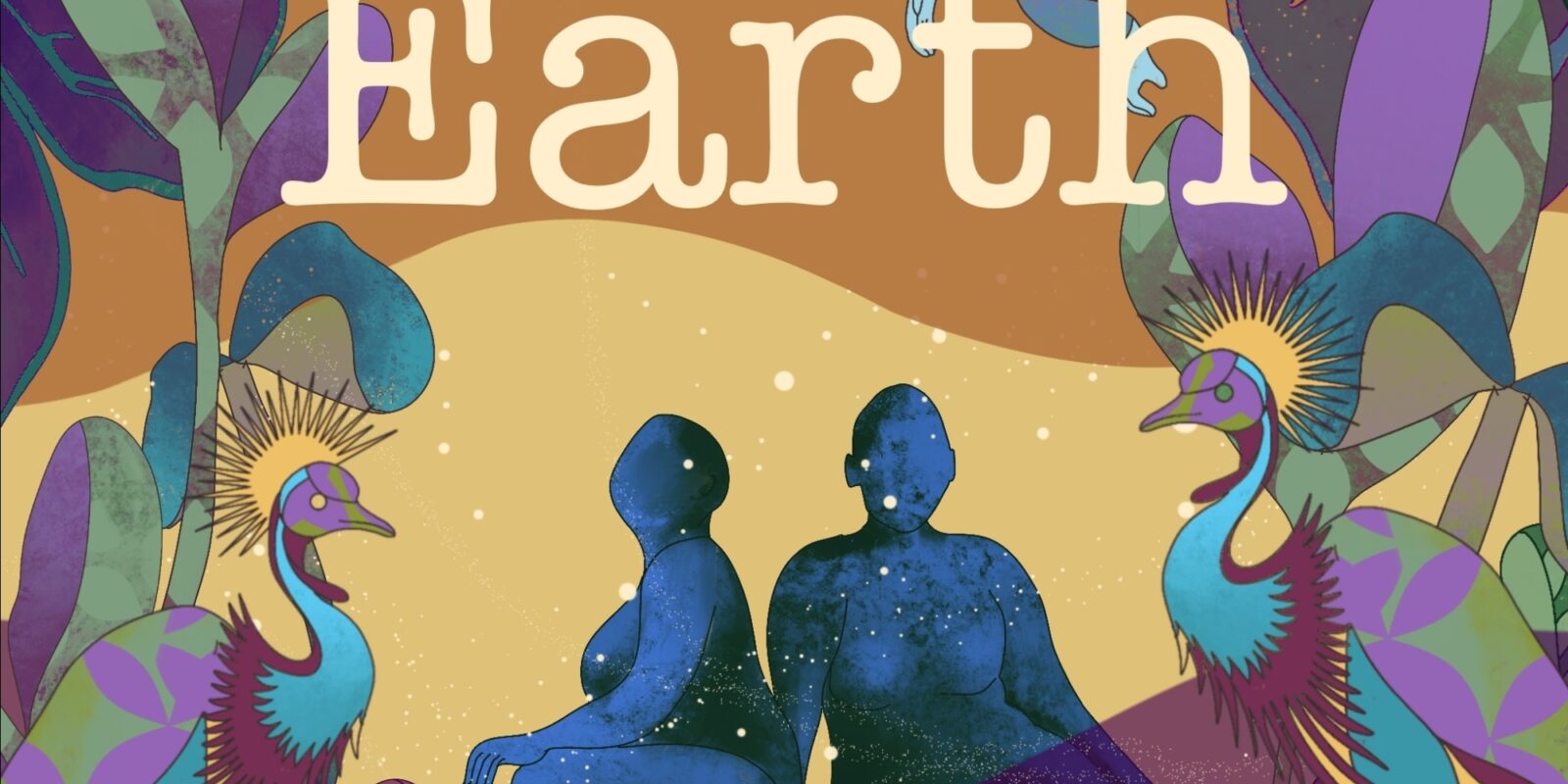
Visual art from Marion's podcast Black Earth.
As part of this series we are interviewing a range of influential and inspirational leaders from across the climate and nature transition. These interviews are intended as a window into innovative and exciting ways of approaching the transition and to spotlight the people who are at the forefront of these changes. Here, we sit down with Marion Atieno Osieyo. Marion is a strategic advisor and storyteller working at the intersection of ecological justice and human flourishing. She works with pioneering institutions and movements building ambitious programmes for Earth care. Marion is also the creator of Black Earth, an award-winning podcast and impact platform celebrating nature and the African and Afro-diasporic women shaping regenerative Earth futures.
What is one object that you currently have on your desk?
I have a fridge magnet, which says, ‘Aqui vive una peregrina’ (a pilgrim lives here). I bought it when I completed part of the Camino de Santiago in 2024. My group and I walked over 120 kilometres in six days crossing stunning and at times challenging terrains. It serves as a reminder of my Christian faith, which helps me stay balanced and grounded in life and work.
The Camino inspired me to cultivate a sense of openness and adventure when the unexpected happens. This is particularly important for me, as I’m often dealing with frontier situations; as the creator of a growing platform or in my strategic advisory role, helping clients design and build out ambitious initiatives related to sustainability transitions.
It also helped me reframe uncertainty as the potential of infinite opportunities even in moments when the unknown can be overwhelming. I have grown in my own capacity to regulate myself during moments of acute uncertainty and eventually find hidden opportunities in unexpected or uncertain situations.
I think this is a life skill we need not just as people working on sustainability transitions but as people living life, especially in a period of profound change.
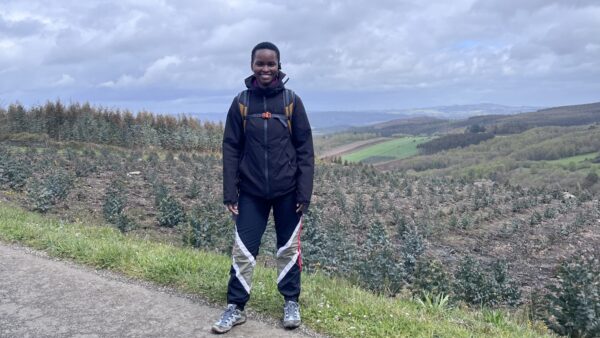
Marion walking the Camino.
How would you explain what you work on to a five year old?
You know how when you're building the most amazing sandcastle, and you're so excited and working so hard, but sometimes you step back and you're not quite sure where to go next, or what it's really trying to be?
I’m the person who helps you understand what you want from your sandcastle. I ask you questions, come up with different ideas, and bring different tools you hadn’t used before. And we work together. And suddenly everything clicks, you know why you are building your sandcastle, what you really want it to do and you end up building something even more magnificent than you imagined.
That’s what I do in my work, except this time it’s not a sandcastle, but taking care of our beautiful planet. People come to me when they want to build something really amazing for our planet, but it feels a little impossible and they don’t quite know what to do. So, I come up with ideas, different examples, maybe things they hadn’t noticed before. And we figure out a way to build what they want and make it work.
Can you describe a recent moment or experience on a project that has particularly stuck in your mind?
Over the past five months, I’ve been creating the latest season of my podcast and impact platform, Black Earth. Our work celebrates Mother Earth and amplifies the voices of African and Afro-diasporic women leaders in the environmental movement.
Through storytelling, collaborations with social impact organisations, and creating open-access tools, we want to inspire individuals to heal and restore our relationship with Mother Earth.
Black Earth exists at rare intersections: environmental science and relational storytelling, inner transformation and structural change, ancestral knowledge and contemporary activism.
Our latest season, Just and Joyful Transitions explores solutions for socially just climate transitions. I wanted to explore what solutions African and Afro-diasporic communities bring to the conversation on climate transitions. I also wanted to explore what climate transitions look like when the starting point for change is reconnecting our relationship with Earth on a personal and collective level.
I’ve found this season to be more profound because in their own way, each person I’ve interviewed is working on some form of societal transformation.
For example, I interviewed Eugenia Kargbo who is working on extreme heat resilience in Freetown, Sierra Leone. Her work involves facilitating climate adaptation at the city level, bringing together community action, policy change, and nature-based solutions.
I also met with Mashudu Takalani of EarthLore Foundation to discuss her work stewarding seed sovereignty in Southern Africa by helping communities to restore their ancestral agricultural practices.
This season has highlighted to me what it looks like to work on societal transformations on a daily basis. The people I’ve interviewed operate on an ambitious scale because that is really the only viable path for meaningful progress. They leverage collective action as a central component of their work. They envision cultural change (social norms and beliefs) and community well-being as important pathways to facilitating social change.
It’s been an inspiring and meaningfully challenging season.
What are some of the hardest challenges you’re grappling with right now?
When I started working in the environmental space 12 years ago, there was a real sense of optimism about the sustainability transitions (remember, SDGs??!)
The world has changed so much since then and continues to change at a rapid pace. We are in the middle of many transitions (environmental, digital, demographic, geopolitical, economic).
In the UK, the public discourse on climate and ecological transitions feels more fractured and understandably overshadowed by increasing economic precarity and social polarisation.
Progress, at times, feels slow in proportion to the scale of the changes we navigate on a daily basis. I sense cynicism, fatigue, burnout for those of us who have been working on these issues for a long time.
However, I also sense a greater appetite to try ideas and pathways that were once considered outside the box. Conversations about macro-economic transformations, or inner pathways of social change (worldviews, social norms, climate emotions) are no longer viewed as fringe ideas but tactical pathways for change.
The challenge for me is maintaining the sense of active hope I’ve carried in my work even when external conditions look particularly bleak. I think if we lose hope in the possibility of change in any situation, that possibility stops existing.
On a personal level, I continue to develop my own capacity for hope by learning the fundamentals of how change works in nature and human civilisation, tending to my personal well-being daily, and deepening my community of relationships.
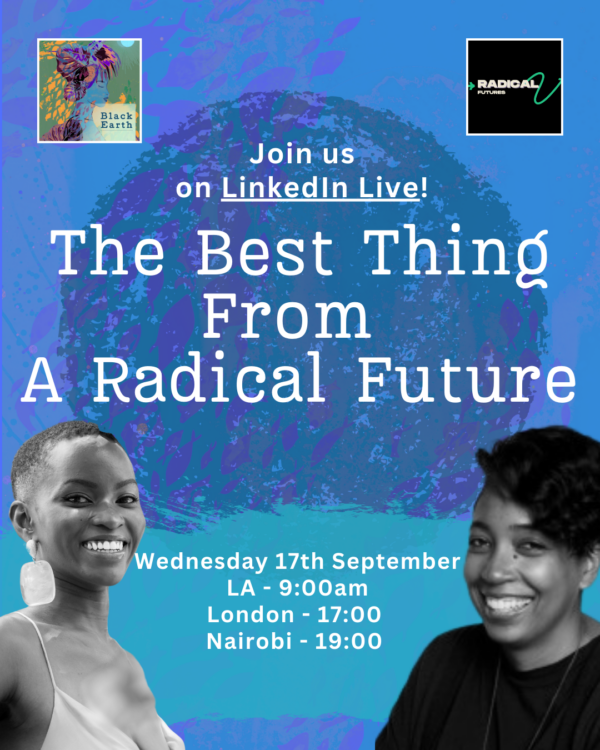
Marion's previous LinkedIn live event with Tracee Worley, 'The Best Thing From A Radical Future'.
And what are the most exciting developments you are seeing in your space?
Lately, I’ve been thinking a lot about what stands the test of time; from architectural design to ideas. Things that stand the test of time do so not because of force but because they are aligned with fundamental principles of truth.
I think biocultural diversity is an idea that stands the test of time. It describes how biological diversity, cultural diversity and linguistic diversity evolve together. The inverse of this can be seen as we see a positive correlation between biodiversity loss and language loss globally.
This idea inspires me because I find it to be an effective entry point when exploring the links between nature and society in any given geography. Understanding how a particular social group relates to nature, involves exploring cultural norms and language.
Synchronicity Earth is a conservation funder that has done a lot of work investing in biocultural diversity conservation initiatives around the world. They also supported Season 4 of Black Earth Podcast. I admire the work of Gaia Foundation, in particular their work facilitating Earth Jurisprudence.
I am inspired by visual art, and I think in the digital age we are part of visual arts is a very powerful means of influencing social consciousness. I am a fan of Shanice Da Costa, who creates our art at Black Earth, and Féminas Ilustradas, an activist collective from Cali, Colombia. I think they create art that powerfully explores biocultural diversity.
I am also excited by the futures and foresight practices, in particular learning from the diverse lineage of futures practices that exist around the world. Futures and foresight is the deliberate practice of exploring possible scenarios of the future and identifying ways to respond to these scenarios. The idea of the future is prevalent in discussions of sustainability whether we are talking about intergenerational justice or forecasting climate scenarios. I also find it personally to be an empowering practice when you come together with other people to unpack assumptions we hold about the future.
I think the School of International Futures is doing a great job in fostering futures practice especially among emerging change-makers, through the Next Generation Foresight Practitioners Network. I also interviewed Tracee Worley, a design futurist doing incredible work bringing new methodologies and voices into the futures and foresight field.
A final development that has been exciting for me is exploring human and more-than-human relationships and the types of governance mechanisms that can ensure greater equity and co-existence between different species. I am learning a lot from Sentient Futures Network and their work on inclusive AI governance. I am always inspired by Joycelyn Longdon and her thoughtful and incisive work on AI governance, nature conservation and community justice.
As I write this, I realise that these developments are not new, in the sense that they have never been done before. They reflect a deepening of conversations that we have always had as a civilisation, mainly about our relationships with nature, with each other and with power.
You’re organising a gathering to discuss new approaches to the transition to a sustainable future. What does it look like, what would it focus on, and who would be around the table?
I am actually organising one now, bringing together an interdisciplinary group of innovators working on socio-ecological transformation.
More info will be announced later this year but there will be time for food, dialogue, rest and of course, time with nature.