Creative commissions from this year's Unconference
Last month, we worked with artists to produce depictions of speculative worlds to provoke conversations about decision making for the future. In this article we're showcasing some highlights from the commissioning process.

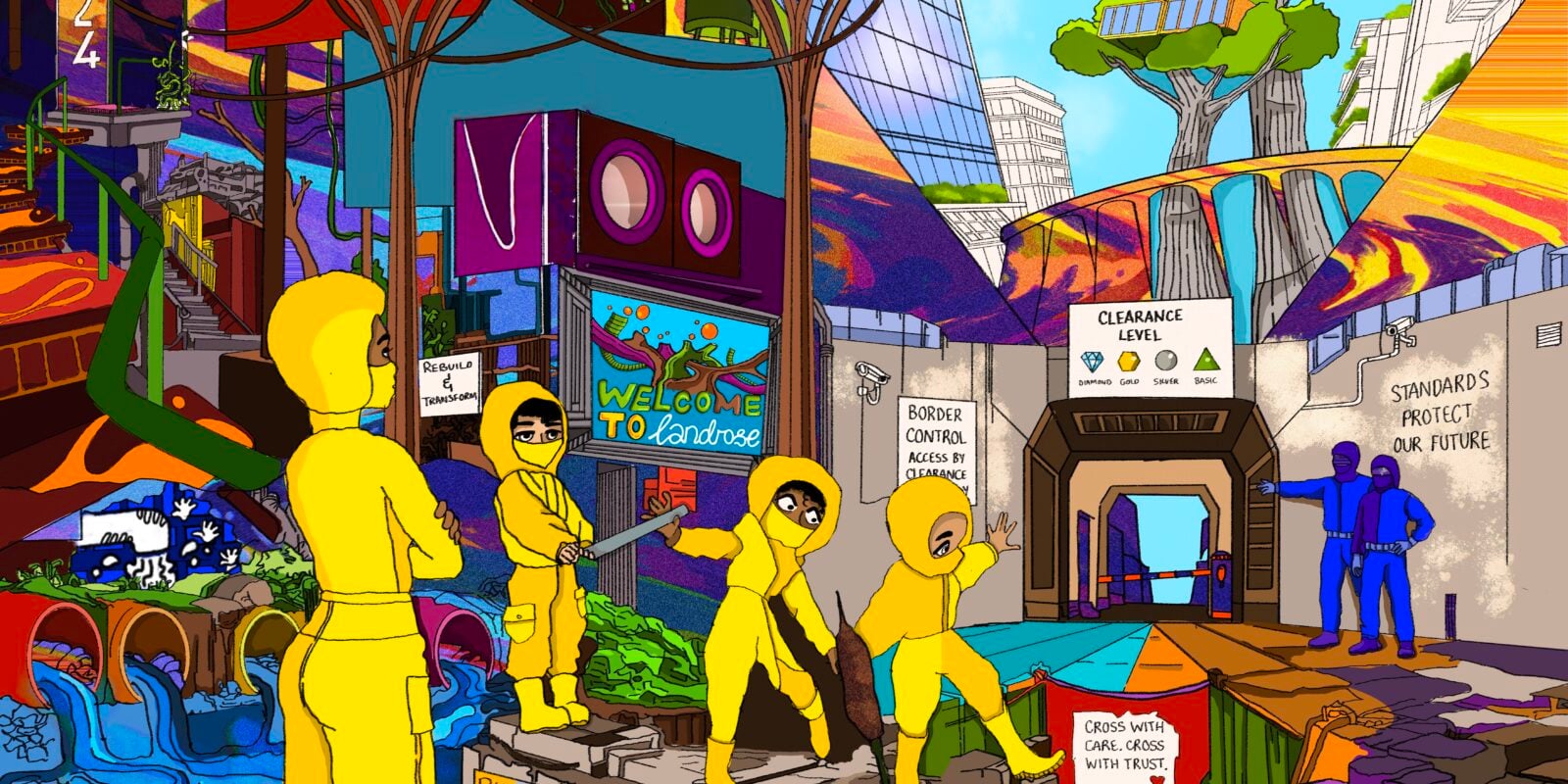
Illustration by Tamara Mufaro Mushaninga, via the Magamba Network
Infrastructures of Tomorrow
In September, we worked with Chatham House's Digital Society Programme to co-host our annual Unconference event, bringing together a diverse community to explore the question: what should the infrastructures of tomorrow look like and how can we go about building them?
As part of our belief that a wider range of tools, practices and mental models are necessary for decision-makers and societies to better understand the present and take better decisions about the future, we commissioned four artists to produce works of speculative future worlds to be displayed on the day. The works were intended to act as provocative entry points into conversations about the future and the building of tomorrow's infrastructure.
In the commissioning process, we used the AI futures tool we've been co-developing with our friends at Lucid Dot which collides emergent signals of change in the present, imagines them as dominant features of a future world and produces a detailed vision of what that world would look like (you can read more about that here). Once we generated these we sent them on to our creatives, and asked them to explore these worlds and portray them in whatever ways they saw fit.
From giant beaver costumes to surreal and abstract portraits made using generative AI, we were blown away by the results. Read on to see the artist's work, some fragments of the future world they were given as inspiration, and some reflections from each of them...
About the artists:
Primavera De Fillipi is a Research Director at Frances National Centre of Scientific Research at Harvard’s Berkman-Klein Centre for Internet and society. Her artistic work explores unpromtable latent space, discovering images that hide in the internal geometry of a model
Tamara Mushaninga is a Zimbabwean artist and multidisciplinary brand and media designer working at the intersection of culture, community, and social impact. She designs visual identities, campaigns, and creative experiences that translate complex ideas into bold, accessible storytelling
Tafadzwa Tarumbwa is a Zimbabwean artist, designer and animator. His work has been showcased at various global festivals and media platforms. He has designed artwork for the British Embassy in Harare.
Studio Futurall is a creative design studio which combines creative storytelling with values-based, collective reimagining for systems change led by Finn Strivens and Eva Oosterlaken.
Matilda Agace works as an associate at Zinc Innovation Partners, previously she worked at the University of the Arts London and Design Council.
Selected work: New Civic Utilities - Primavera De Fillipi
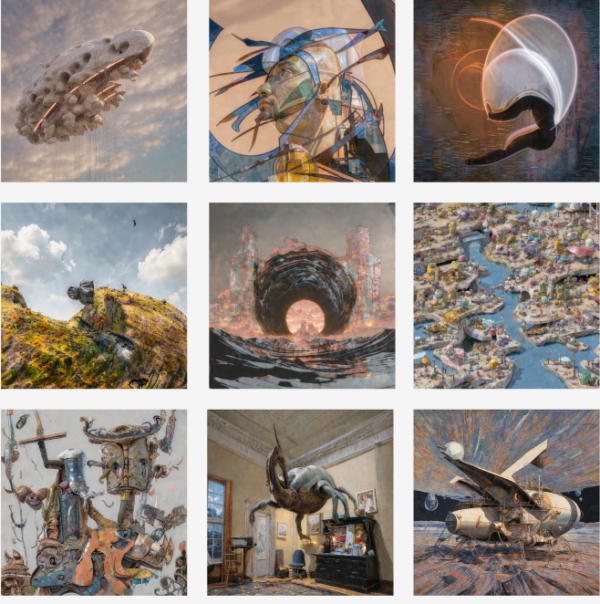
Artwork by Primavera De Fillipi
The speculative world that we provided Primavera with was one defined by the emergence of new civic utilities including new forms of digital democracy, emergent grid technologies and openly available, democratised AI. Some fragments of this world can be found in the quotes below.
Using generative AI to explore 'unpromptable latent space' Primavera produced a range of surreal images which explore the tension between familiar and ambiguous elements of this speculative future.
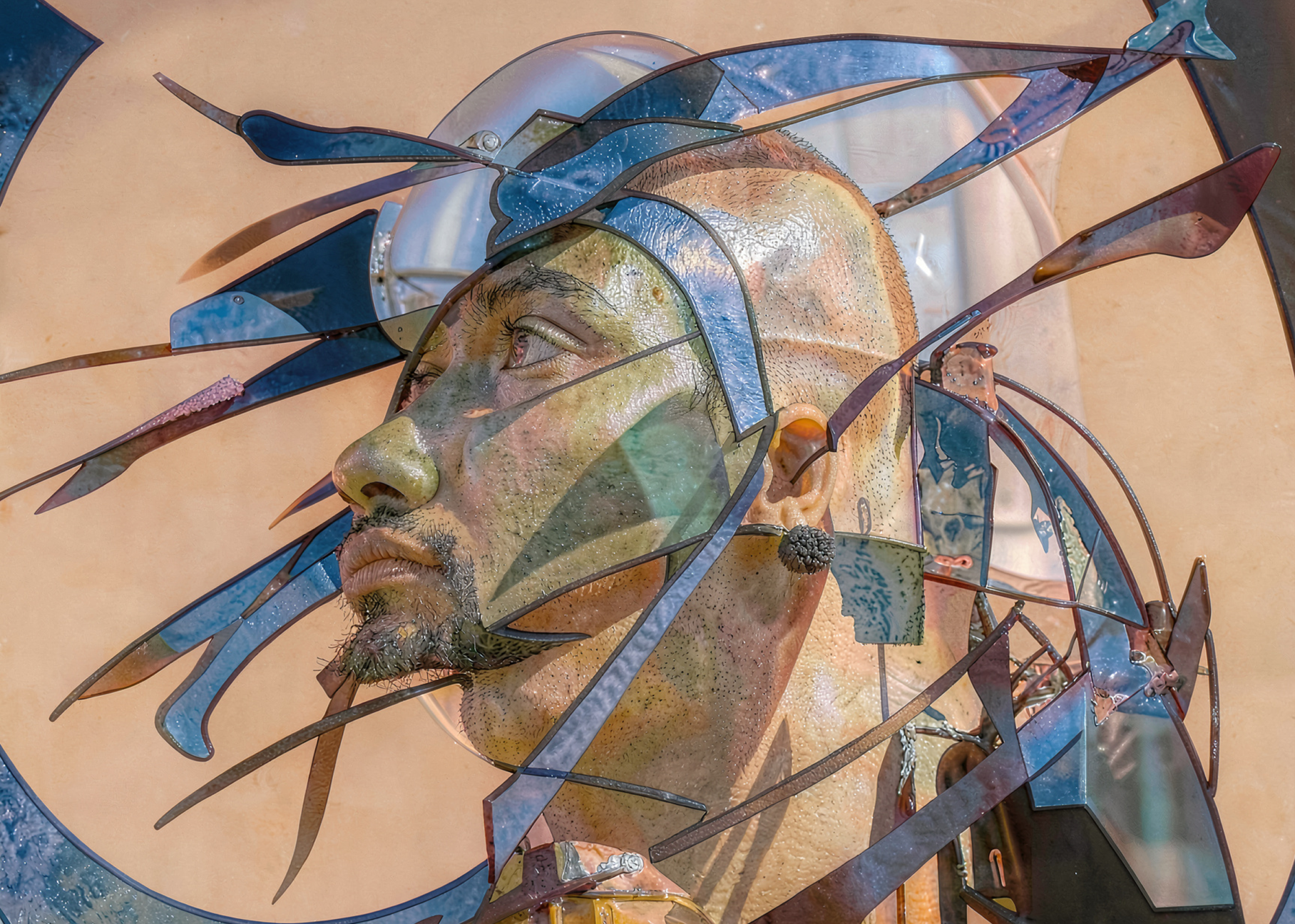
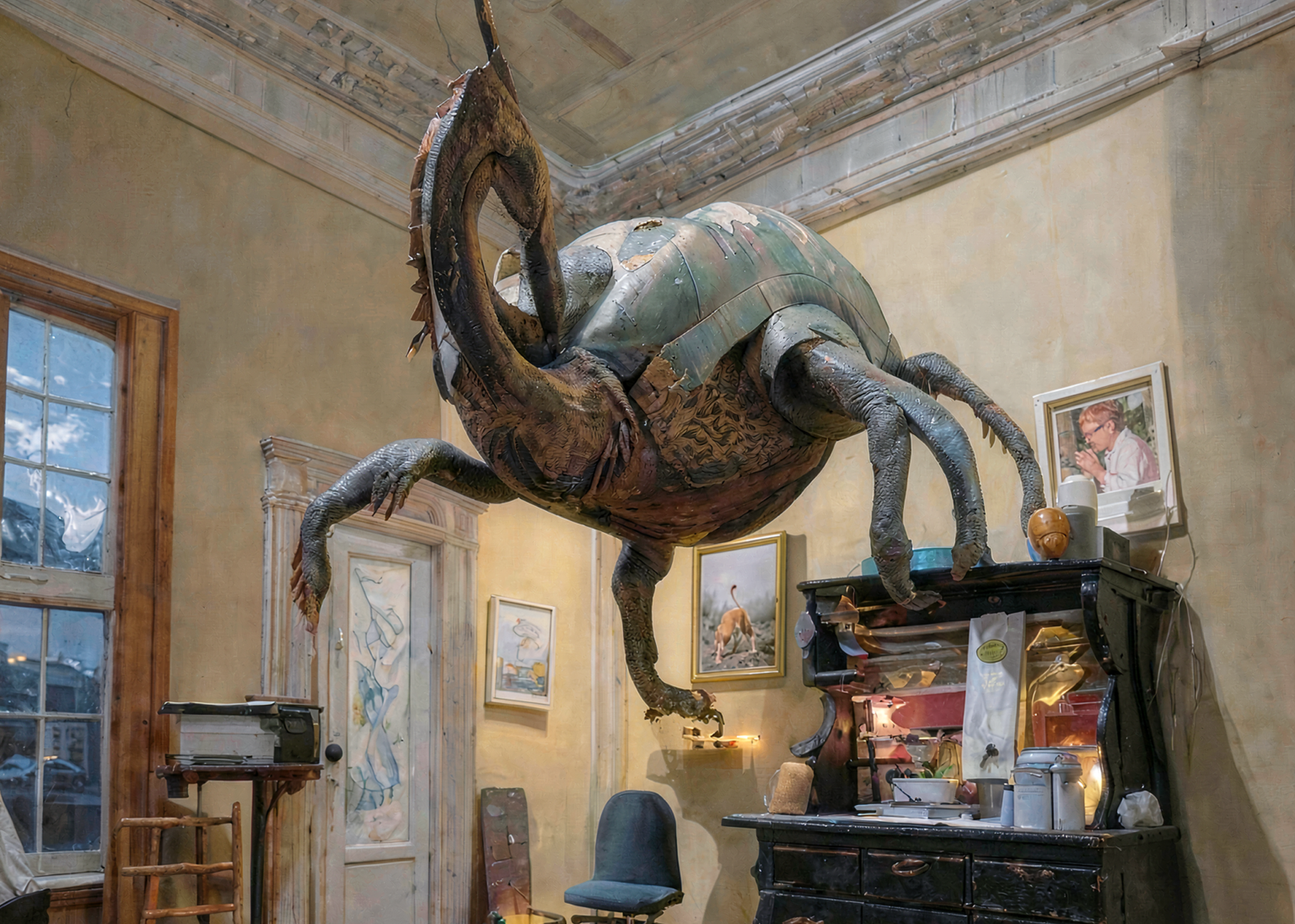
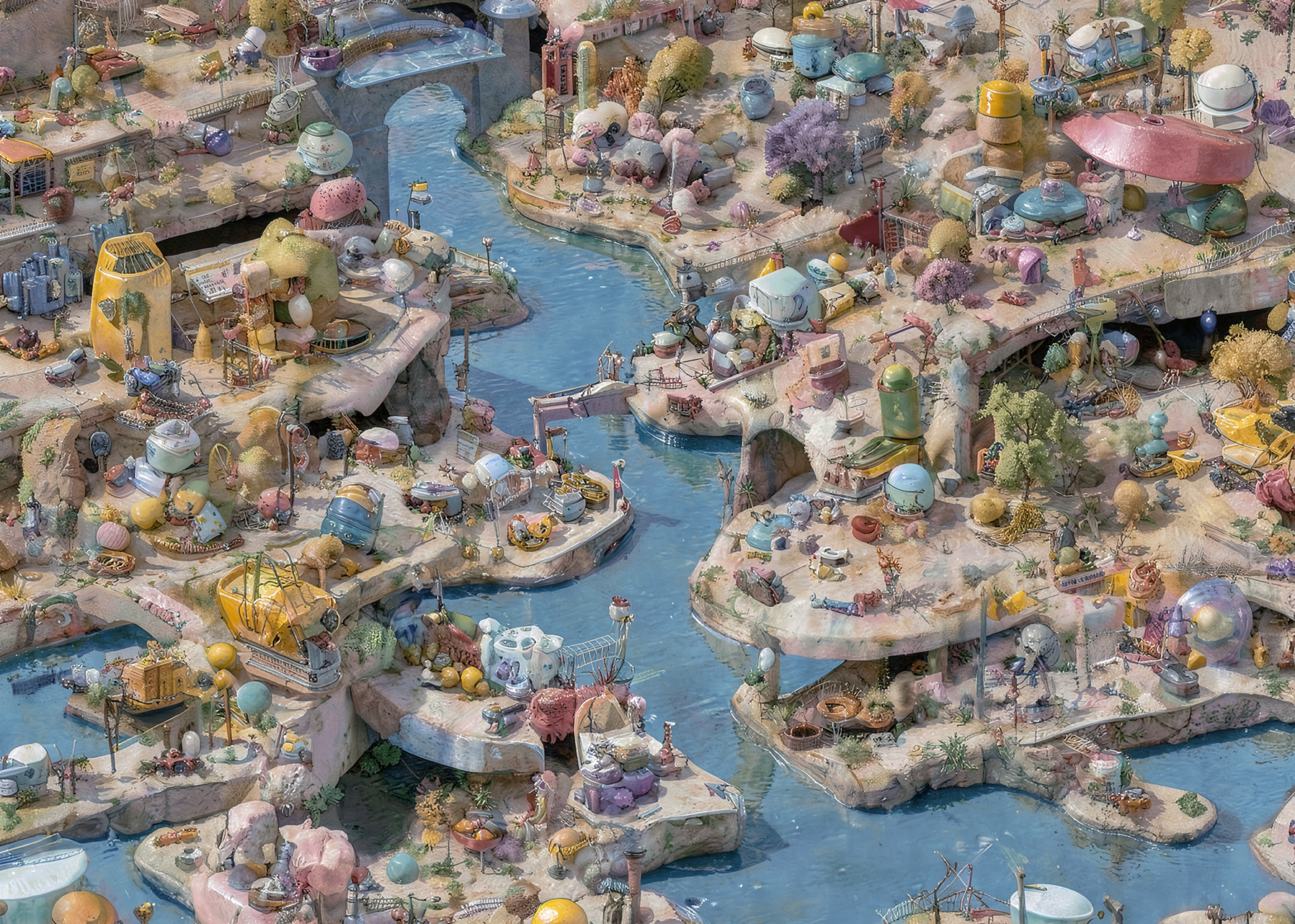
Images that cannot be described
Part of Primavera's artistic process involved the use of generative AI to produce images that cannot be described with words...
"Text prompts are used once in my process, and never again. I begin by running a thousand prompts through a text encoder (CLIP) which translates human language into a set of instructions that can be understood by an image model like Stable Diffusion. I obtain a collection of internal tensors which I can analyse to retrieve a statistical distribution of what a good prompt looks like in vector space. I can then sample new coordinates which are slightly out of distribution and feed them directly into Stable Diffusion for it to generate images that no prompt could reach.
But the unpromptable area of latent space is way too large for a human to navigate without proper indications. I thus spawned a few agents to scout the space in search of images that maximize three simultaneous criteria: distance from the mean, novelty against everything they have seen before, and aesthetic resonance against an optimizer trained on my own taste. Eventually, the agents converge on these rare regions of latent space where the three criteria hold: islands of interest in an ocean of noise. The works submitted for this exhibition are all such discoveries. None of them was prompted or otherwise described."
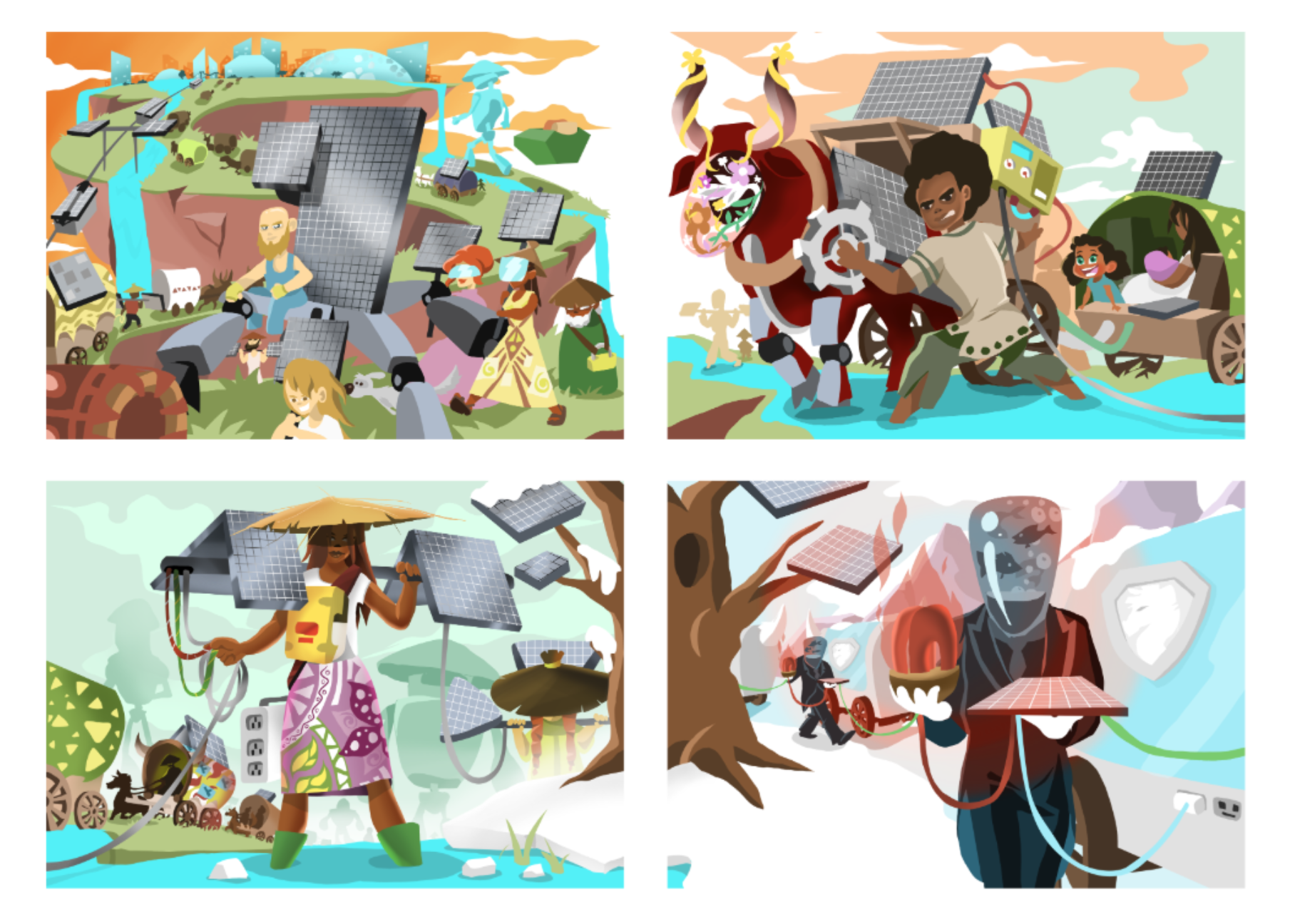
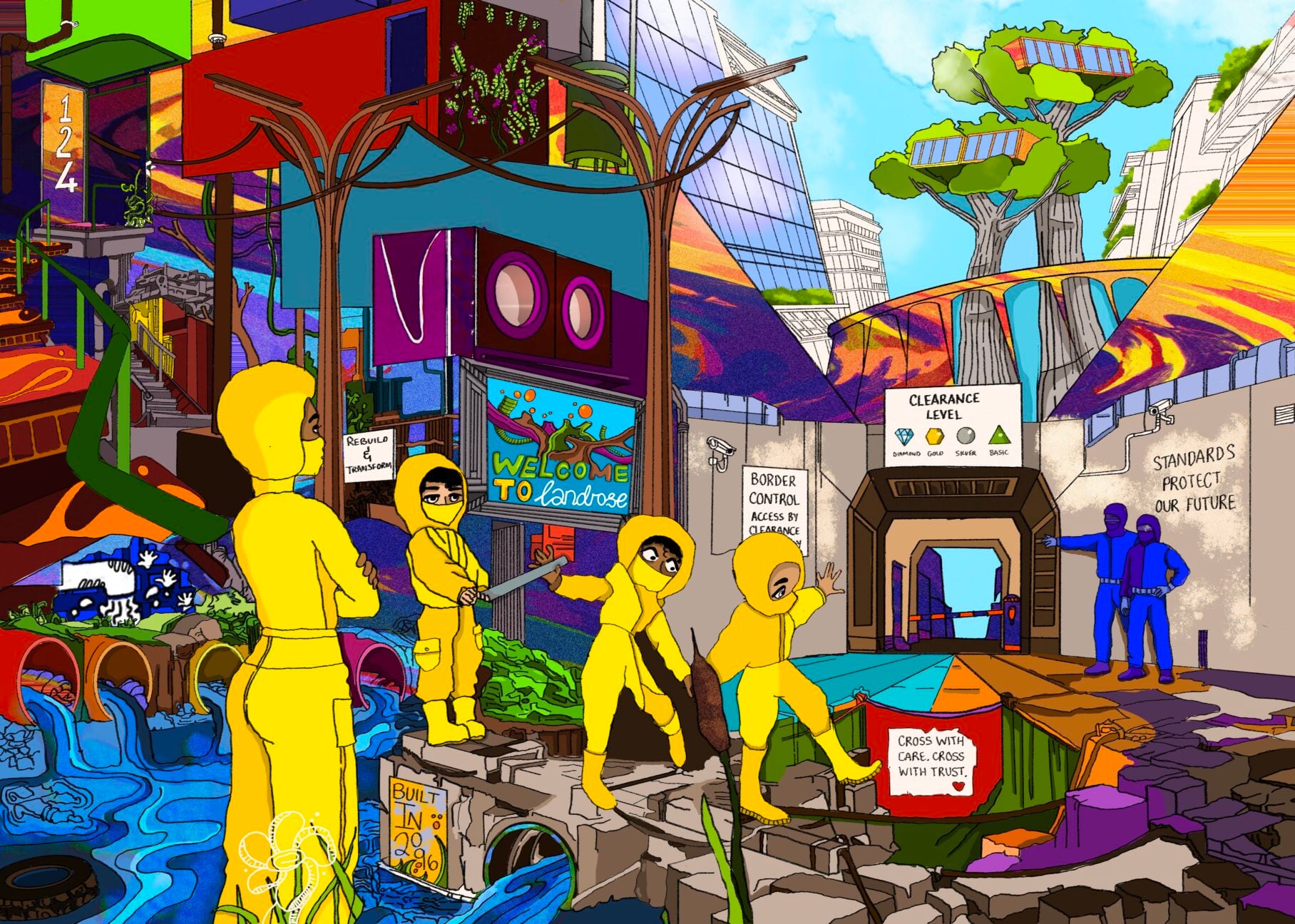
Selected work: The Streets are Ours to Edit - Tamara Mufaro Mushaninga, Tafadzwa Tarumbwa
Tamara and Tafadzwa were both given a speculative world defined by shifts in urban realities. In this future, reversible architecture is commonplace, Solarpunk has become a mainstream culture and neighbourhood mesh networks have replaced private network providers.
Both artists explored this world in distinct but overlapping ways - highlighting the complexities and tensions behind the process of innovation.
Selected work: Care Hubs and Neighbourhood Twins: Studio Futurall and Matilda Agace
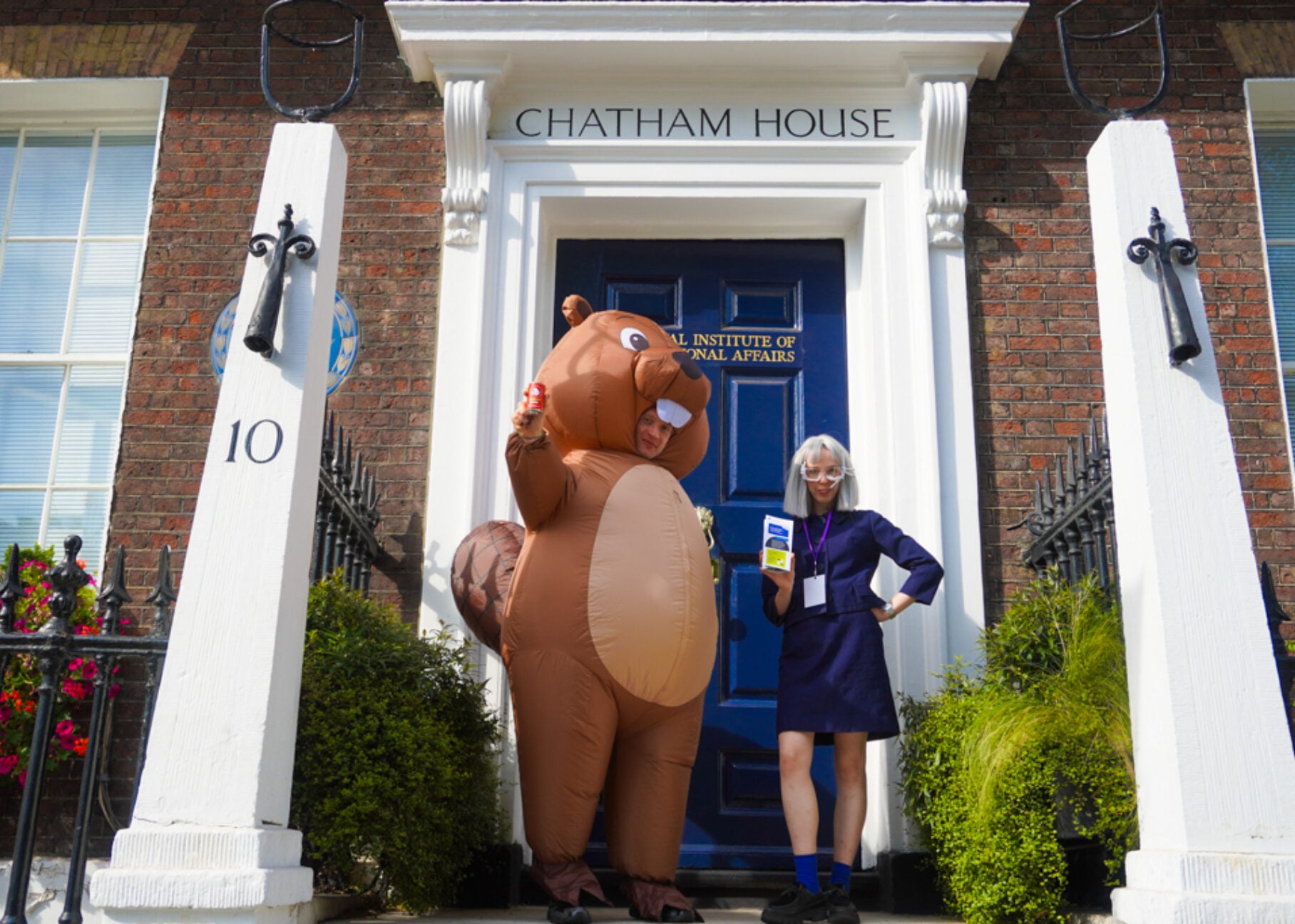
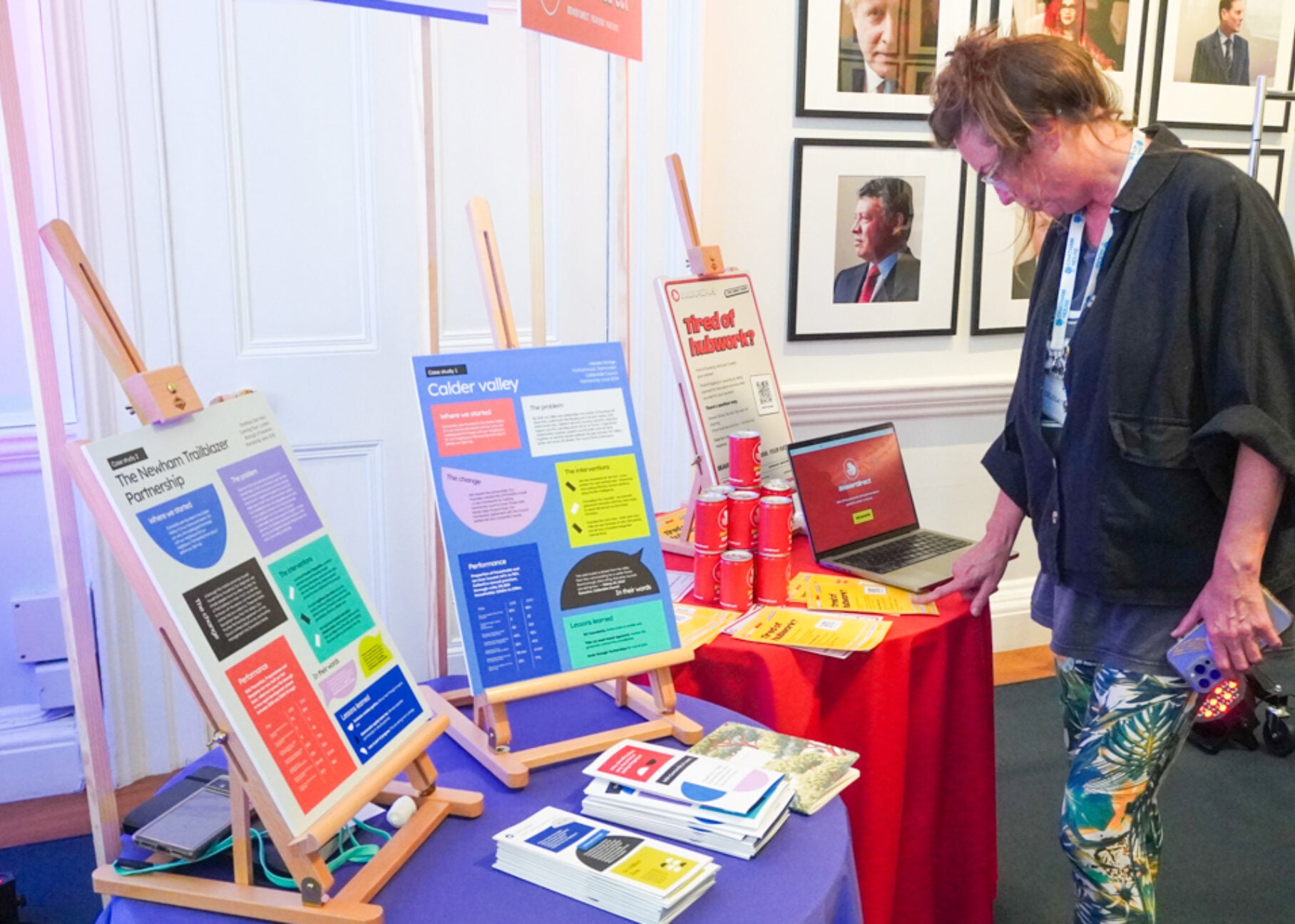
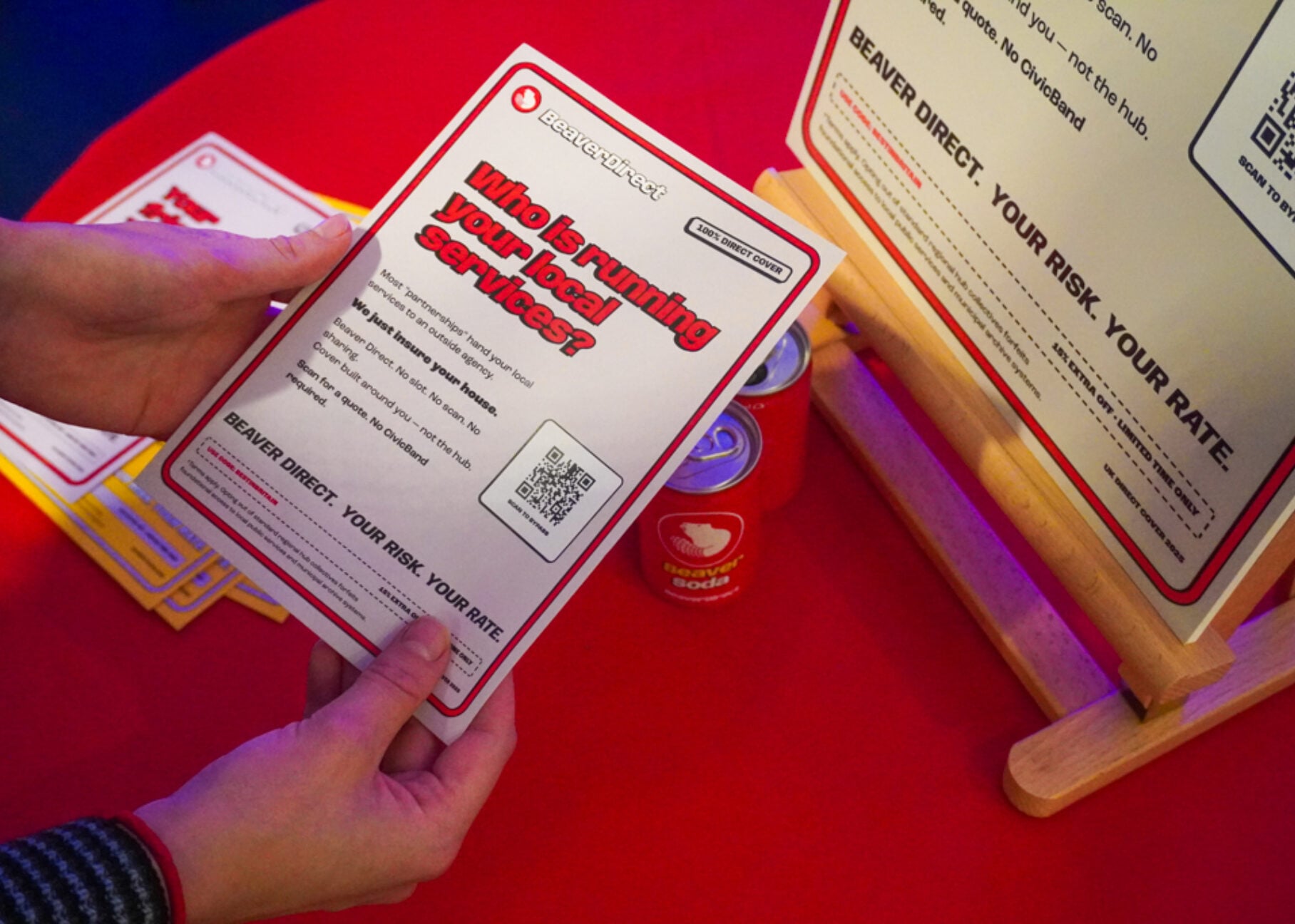
The speculative world provided to Studio Futurall and Matilda was one defined by the shifting contours of care infrastructure. Beavers become a core part of national insurance programmes; culture and identity becomes increasingly digital and neighbourhood centres act as the main providers of care.
Taking an embodied and theatrical approach to their work, Studio Futurall and Matilda considered what the insurance firms would look like in this future. Cosplaying as two insurance salespeople in this future world, Finn and Matilda offered an opportunity for Unconference participants to physically experience this future.
This commission forms part of a broader enquiry about how societies and decision makers can become better equipped to forge the future worlds and build the infrastructures of tomorrow.
If this resonates with you or the work you're doing, we'd love to hear from you. Drop us a line on Sustainabilityaccelerator@chathamhouse.org